

You walk into the laundry room and there’s a puddle spreading out from under the machine, creeping toward the hallway. Maybe it’s a small dribble at the front. Maybe it’s a proper flood and you’re already throwing down towels.
Either way, a leaking washing machine is the kind of problem that gets worse the longer it sits, and if you’re in a condo it isn’t only your floor at stake. The good news is that most washer leaks come from a short list of places, and a few of them you can sort out yourself.
Below is where the water usually comes from, how to tell which one you’ve got, and when it’s time to get a technician out before it reaches the suite below.
What you’ll learn
- The most common places a washing machine leaks from
- How to tell a real leak from too much detergent
- Why a front-load door leak is so common, and what causes it
- Which leaks you can fix yourself, and which need a technician
- What to do right now if water is pooling on the floor
Table of Contents
First, what to do if water is pooling right now
Before you hunt for the cause, stop the water from spreading. A leak near an electrical appliance is both a slip risk and a shock risk, so deal with that first.
Turn off the hot and cold taps behind the machine. Switch the washer off at the wall if you can reach the plug safely with dry hands, or at the breaker if the plug is anywhere near the water. Mop up what you can. In a condo, the faster you stop it, the less chance it reaches the suite below and turns into a strata claim. Then find the source before you run another load.
Where a washing machine leak comes from
Nearly every washer leak traces back to one of the spots below. The quickest way to narrow it down is to notice where the water shows up and when, so start here.
| Where the water shows up | Likely cause | Fix it yourself? |
|---|---|---|
| Front of the machine, during the wash | Torn or dirty door seal (front-loaders) | Sometimes |
| Behind the machine | Loose or cracked drain or fill hose | Often, yes |
| From the detergent drawer | Clogged drawer, or too much detergent | Yes |
| Foam on the floor | Too much or wrong detergent | Yes |
| Front bottom, after a filter clean | Pump filter cap not seated properly | Yes |
| Underneath, only during the spin | Tub seal or drum bearing | No, technician |
| Overflowing over the top of the door | Overfilling (water valve or sensor) | No, technician |
The door seal, on front-load washers
If you’ve got a front-loader and the water shows up at the front during the wash, the rubber door seal (the boot) is the first thing I check. They tear, they trap coins and underwire that cut into them, and they grow black mould in the folds that stops them sealing properly. Wipe the seal and run your finger along the bottom looking for a nick or a gummy split, that is the section that fails first. A torn boot gets replaced, you can’t really patch it.
The drain hose and fill hose connections
Water at the back of the machine, often during the drain or spin, usually means a hose. The drain hose works loose at its clamp, cracks with age, or gets knocked out of the standpipe when the machine is pushed back. The fill hoses up top can weep at the connection too. These are the most DIY-friendly leaks of the lot, a hose that’s loose or split is a cheap part and an easy swap. Pull the machine out and feel along each hose while a cycle runs.
The detergent drawer and too much soap
A leak from the dispenser drawer is usually one of two things: the drawer and its housing are clogged with old detergent gunk so water backs up and spills, or there’s simply too much soap. Pull the drawer right out, give it a clean, and check the jets behind it. And if the water on the floor looks foamy, that’s not really a leak at all, it’s oversudsing, from too much detergent or regular detergent in a high-efficiency machine. Run a rinse and use less next time. On a Samsung, a true leak often shows as an LC code and too much foam shows as Sud, both of which I cover in our LG and Samsung error codes guide.
The drain pump and its filter cap
Here’s a sneaky one. If your washer started leaking from the front bottom right after someone cleaned the drain filter, the filter cap probably isn’t seated straight. They have to go back in square and snug or they weep every cycle. Beyond that, the drain pump itself can crack or its seal can fail, and a coin or hairpin that slipped past the filter can cut that seal. Those are technician jobs.
A leak only during the spin: the tub seal
A leak you only see during the spin, coming from underneath the machine, points to something deeper, usually the tub seal or the bearing behind the drum. This is the one DIY guides skip over, because it’s a full strip-down. If the water shows up at high spin speed and comes from the centre underneath, get a technician to confirm it before you spend money guessing at parts.
Overfilling over the top of the door
If the machine fills past where it should and spills over the top of the door, the water inlet valve is stuck open or the water level sensor has lost track of where to stop. The machine simply doesn’t know when to quit filling. That’s a parts-and-testing job rather than a DIY fix.
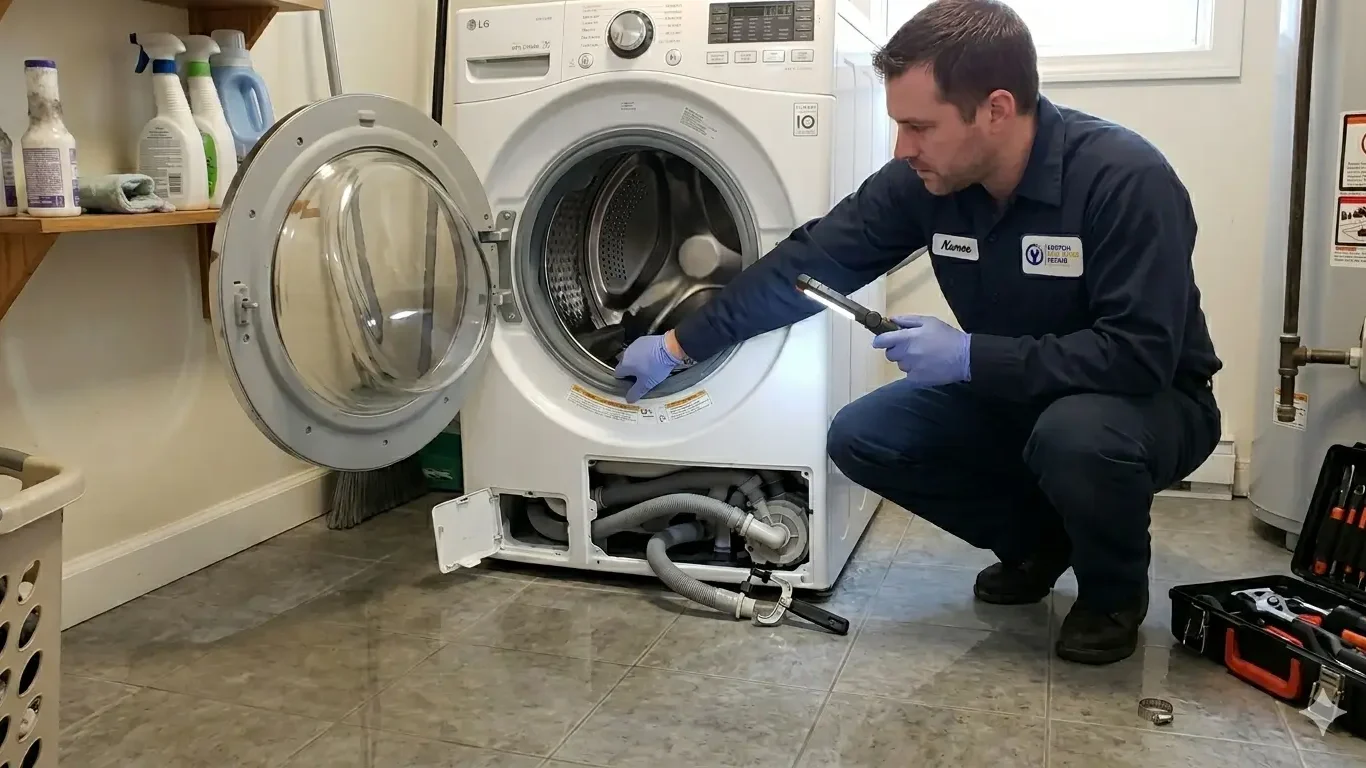
Which leaks can you fix yourself, and which need a technician?
So which of these can you handle on a Saturday, and which need one of us? Hoses, a clogged detergent drawer, too much soap, and a filter cap that isn’t seated are all yours, and between them they cover a good share of the leaks we get called for. A torn door seal is borderline, doable if you’re handy with a bit of patience. But a tub seal, a cracked pump, or an overfilling fault means water under pressure with electrics close by, and that’s when you want washer repair in Vancouver rather than another towel on the floor.
Key takeaway
If the water is foamy, it’s detergent. If it’s at the back, it’s usually a hose. If it only happens on the spin and comes from underneath, that’s the serious one, stop and call a technician.
What I see most in Vancouver homes
I’ve been on the vans across Greater Vancouver for years, and washer leaks are some of the most urgent calls we get, because water doesn’t wait around. In older East Vancouver and Mount Pleasant homes it’s usually aged hoses and worn door seals on machines that have run hard for a decade.
Downtown and Yaletown condos are a different kind of pressure, a slow drip there can reach the suite below and turn a cheap hose into an insurance claim, so we treat those as same-day. We fit manufacturer parts only on every washing machine repair service we do, because a cheap aftermarket seal or pump tends to start leaking again within a year.
Frequently asked questions
A leak from the bottom usually comes from a hose, the drain pump, or the pump filter cap not being seated after a clean. If it only appears during the spin and comes from the centre underneath, it’s more likely the tub seal, which is a bigger repair. Pull the machine out and watch where the water starts while it runs.
On a front-loader, a leak at the door is almost always the rubber door seal. They tear, trap coins and underwire, and grow mould in the folds that stops them sealing. Check the bottom of the seal for a nick or split. A torn seal gets replaced rather than patched.
Yes. Too much detergent, or regular detergent in a high-efficiency machine, creates more foam than the machine can contain, and it pushes out past the door onto the floor. If the water is foamy, that’s the cause. Run a rinse, switch to HE detergent, and use less than you think you need.
It’s best not to. Water on the floor near an electrical appliance is a shock and slip risk, and a small leak can become water damage fast, especially in a condo where it can reach the suite below. Shut off the taps, unplug it, and get it checked before running another load.
A leak that only shows up at high spin speed, coming from underneath, usually points to the tub seal or the drum bearing. The force of the fast spin pushes water past a worn seal. This one needs a technician, as it’s a strip-down repair rather than a quick fix.
It starts with a $100 diagnostic that we credit toward the repair when you go ahead. A hose or detergent drawer is a minor fix, a door seal is mid-range, and a tub seal or pump is more involved. We find the exact source and quote the full price before any work, with same-day visits across Vancouver.

Washing machine leaking in Vancouver? Let’s stop it today
A leak only gets more expensive the longer it runs, especially above a neighbour. If yours is dripping, pooling, or only showing up on the spin, our team can find the exact source and fix it the same day across Vancouver, and we’ll tell you what’s leaking, and what it costs, before any work begins.