
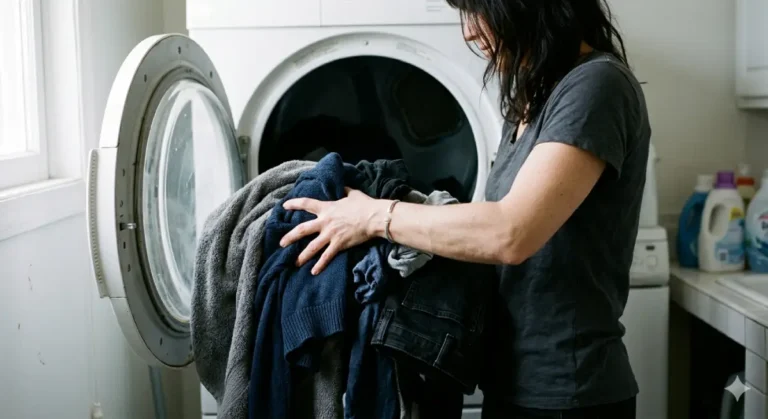
The drum’s turning, the cycle’s running, you can hear it going. But you pull the clothes out an hour later and they’re cold and still damp. A dryer that runs but won’t heat is one of the most common calls we get, and it’s also one where a couple of quick checks can save you a service visit.
There’s one fork that decides everything: is your dryer gas or electric? They lose heat for different reasons and have different parts behind the drum, so that’s where we start.
Below is what’s usually behind a no-heat dryer, what you can safely check yourself, and what needs a technician.
What you’ll learn
- Why your dryer runs but won’t get hot
- The difference between gas and electric no-heat faults
- The few things you can safely check yourself first
- Why a dryer sometimes heats, then quits partway through
- When a no-heat dryer needs a technician, and why gas is hands-off
Table of Contents
Gas or electric? Why that’s the first question
Before anything else, work out which dryer you’ve got. An electric dryer makes heat with a heating element and runs on a large 240-volt outlet. A gas dryer makes heat by lighting gas and runs on a normal plug plus a gas line. They fail in different ways, so knowing which one you have cuts the list of suspects in half. Not sure? A gas dryer has a shutoff valve and a flexible gas line behind it. An electric one has a big square 240-volt plug.
Why your dryer is not heating
Almost every no-heat dryer comes down to one of the causes below. Notice whether yours is gas or electric, and whether it has no heat at all or heats then quits, and you’ll narrow it down fast.
| What’s happening | Likely cause | Gas / Electric | Fix yourself? |
|---|---|---|---|
| No heat at all, drum still turns | Blown thermal fuse or burned-out element | Electric | Some checks |
| No heat at all, drum still turns | Faulty igniter or flame sensor | Gas | No, tech |
| Runs fine but never heats | One lost leg of the 240-volt power | Electric | Reset breaker |
| Heats, then goes cold mid-cycle | Cycling or high-limit thermostat | Both | No, tech |
| Heats weakly, clothes stay damp | Restricted airflow, full lint filter | Both | Filter, then tech |
A blown thermal fuse (electric, the common one)
On electric dryers, the single most common reason for no heat is a blown thermal fuse. It’s a small safety part that cuts the heat if the dryer ever runs too hot. When it blows, the drum keeps turning but the heat is gone completely. Swapping it is simple, but here’s the part people miss: the fuse blew for a reason, almost always restricted airflow, so if you just replace it without addressing the airflow, the new one blows too. We check both.
The heating element (electric)
If the thermal fuse is fine, the heating element is the next suspect. It’s a coil of wire that glows hot, and over the years it burns through and breaks, like a light bulb filament. Once it’s open, no heat. You can test it for continuity with a meter if you’re handy, otherwise it’s a quick diagnosis for a technician.
The igniter and flame sensor (gas)
On a gas dryer, no heat usually comes down to the igniter or the flame sensor. The igniter glows hot to light the gas, and when it weakens or fails the gas never lights, so the drum spins cold. The flame sensor can also stop confirming it’s safe to fire. These sit right at the gas burner, which is exactly why gas dryer heat faults are not a DIY job.
Only half the power is getting through (electric)
Here’s a sneaky electric one. A 240-volt dryer actually runs on two 120-volt legs. The drum motor only needs one leg to spin, but the heating element needs both. So if one half of the power drops out, from a half-tripped breaker, a worn outlet, or a damaged cord, the dryer runs perfectly but never heats. Fully resetting the breaker, right off then back on, is worth a try before anything else.
It heats, then quits partway through
If the dryer is hot at the start and goes cold halfway through, that points to a thermostat, a cycling one or a high-limit one, shutting the heat off early. Usually that’s down to overheating from poor airflow, or a sensor reading the wrong temperature. This one’s a technician diagnosis, since it means testing parts while the dryer runs.
A full lint filter and restricted airflow (both)
Airflow is the quiet cause behind a lot of no-heat and slow-drying calls. When air can’t move through the dryer properly, it overheats and trips the safety fuse, or the clothes simply never dry. The first thing to check is the lint filter: empty it every load, because a clogged screen on its own can choke airflow enough to cause trouble. If the filter’s clean and the dryer still struggles, the airflow is being restricted further along, and that needs addressing before the dryer will hold heat reliably.
Which of these can you safely check yourself?
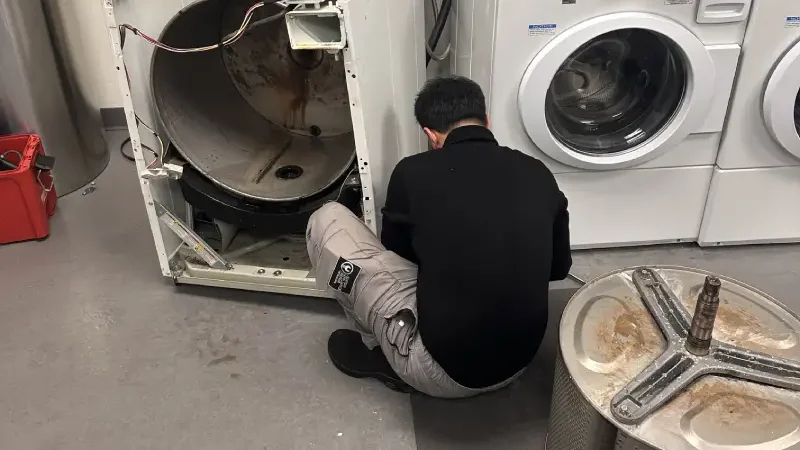
A few of these are fair game before you call anyone. On an electric dryer: empty the lint filter, then fully reset the dryer’s breaker (switch it right off and back on) in case you’ve lost one leg of power. On a gas dryer: check that the gas shutoff valve behind it is actually open. That’s about as far as I’d go. Anything involving the heating element, the igniter, the gas burner, or testing thermostats means opening the machine up around electrical and gas parts, and that’s when you want dryer repair in Vancouver rather than a video and crossed fingers.
Key takeaway
Electric and won’t heat at all? Suspect the thermal fuse or a lost power leg. Gas and won’t heat? Usually the igniter, and that’s a technician job. Heats then quits, or dries slowly? Think airflow first.
The heat parts on a gas dryer sit at the gas burner, so leave those to a technician. And if you ever smell gas, don’t troubleshoot anything: leave the home and call your gas provider’s emergency line from outside.
What I see most in Vancouver homes
I’ve been running washers and dryers across Greater Vancouver for years, and a no-heat dryer is a weekly call. On electric machines it’s thermal fuses and tired heating elements more than anything, often on dryers tucked into a closet where the airflow was never great to begin with.
In condos and townhouses where the exhaust path is long and winding, I see the heat-then-quit pattern a lot, because the air just can’t move fast enough. We fit manufacturer parts only on every dryer repair service we do, because an off-brand element or fuse tends to fail early, and sometimes unsafely. Noise is the other big dryer call I get, and I’ve covered that in why your dryer is loud.
Frequently asked questions
It usually means a part that makes or controls the heat has failed while the drum motor keeps working. On electric dryers that’s most often a blown thermal fuse, a burned-out heating element, or one lost leg of the 240-volt power. On gas dryers it’s usually the igniter. The drum spins either way, which is why the clothes come out cold.
On an electric dryer it’s commonly one of the two. A blown thermal fuse cuts the heat completely and is often triggered by restricted airflow, while a failed heating element burns through like a light bulb filament. A technician can tell them apart in minutes with a meter, and it matters because a fuse that blew from poor airflow will blow again if the airflow isn’t addressed.
Heating at first and going cold mid-cycle usually points to a thermostat shutting the heat off early, often because the dryer is overheating from restricted airflow or a sensor is misreading the temperature. It needs testing while the dryer runs, so it’s a technician job rather than a quick swap.
Indirectly, yes. A blocked lint filter chokes the airflow, the dryer overheats, and the safety fuse cuts the heat to protect the machine. Empty the filter every load. If it’s clean and the dryer still won’t heat or dries slowly, the airflow is being restricted further along and should be checked.
No. The parts behind a gas dryer’s heat, the igniter, flame sensor, and gas valve, sit right at the gas burner, so that’s a technician job for safety. You can check that the gas shutoff valve behind the dryer is open, but go no further. If you ever smell gas, leave the home and call your gas provider’s emergency line.
It starts with a $100 diagnostic that we credit toward the repair when you go ahead. A thermal fuse is a minor fix, a heating element or gas igniter is mid-range, and a control or thermostat fault sits higher. We diagnose the exact cause and quote the full price before any work, with same-day visits across Vancouver.

Dryer not heating in Vancouver? Let’s get it warm again today
A dryer that runs cold only wastes more time and power with every load. Whether it’s electric or gas, our team can find why it’s not heating and fix it the same day across Vancouver, and we’ll tell you the cause, and the cost, before any work begins.