
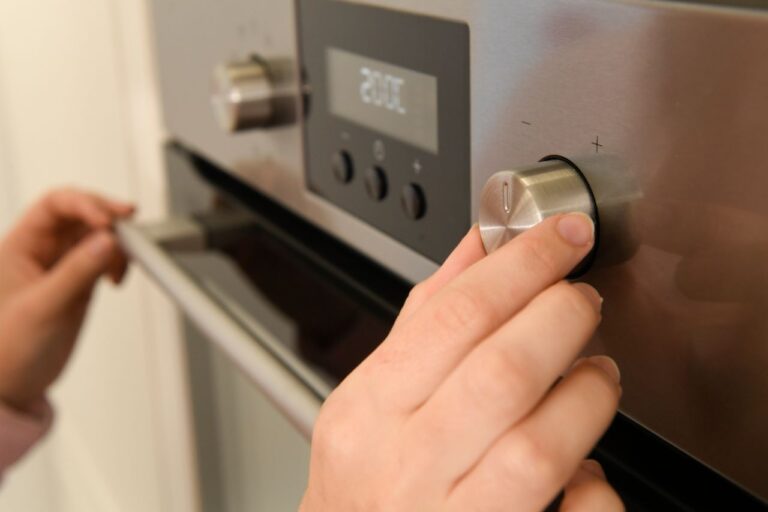
You set your oven to 400°F, wait for it to preheat, and expect it to maintain that temperature. But what happens when your food is consistently undercooked, burnt on one side, or taking much longer than the recipe suggests?
An oven that isn’t reaching or maintaining the correct temperature can make everyday cooking unpredictable. The problem isn’t always a broken heating element, either. Temperature sensors, calibration, door seals, airflow, and even the cookware you’re using can affect results.
Before booking oven repair, you can perform a few simple checks to determine whether your oven is genuinely running too hot or too cold.
Start With a Simple Oven Thermometer Test
Your oven’s displayed temperature isn’t necessarily proof of its actual internal temperature. The control panel might say 400°F while the temperature inside the cavity is significantly different.
The easiest way to check is with an inexpensive, oven-safe thermometer.
Here’s how:
- Place the thermometer on the center rack.
- Set the oven to 350°F.
- Allow it to preheat fully.
- Leave it running for another 15–20 minutes.
- Check the thermometer.
- Record the temperature.
- Repeat the process a few times rather than relying on one reading.
Don’t be surprised if the temperature moves above and below the selected setting. Many ovens cycle their heating elements on and off to maintain an average temperature rather than holding one exact number continuously.
The important question is whether the average temperature is consistently far from the setting.
Don’t Judge the Oven After One Reading
An oven that reaches 375°F when set to 350°F during one moment isn’t automatically defective.
Most conventional ovens naturally fluctuate during a cooking cycle. The heating element switches on as the temperature drops and switches off after the oven reaches a certain point. For a more useful test, take several readings throughout a complete heating cycle and calculate an approximate average.
If the oven consistently runs significantly hotter or colder than its selected temperature, calibration or a component problem becomes more likely.
Check Whether Calibration Is Available
Many modern ovens allow owners to adjust the temperature calibration through the control panel. This feature compensates for small differences between the selected temperature and the oven’s actual operating temperature.
For example, if your oven consistently runs slightly cool, its calibration settings may allow you to increase the temperature offset. However, don’t use calibration to hide a serious mechanical problem. If your oven suddenly becomes dramatically hotter or colder than it used to be, there may be an underlying fault.
Before changing calibration:
- Check your owner’s manual.
- Confirm how much adjustment your model permits.
- Perform multiple thermometer tests first.
- Record the actual temperature difference.
- Avoid making large adjustments without understanding the manufacturer’s settings.
Calibration methods vary considerably between brands and models.
Inspect the Door Seal
The oven door needs to close tightly enough to retain heat. A damaged, loose, hardened, or compressed gasket can allow hot air to escape continuously. That can make the oven work harder to maintain its target temperature and may result in inconsistent cooking.
Look around the entire perimeter of the oven door gasket. Check for:
- Cracks or tears
- Sections pulling away from the frame
- Flattened areas
- Gaps
- Visible deterioration
- Food or grease buildup preventing a proper seal
Don’t pull aggressively on the gasket or attempt an improvised repair. If it’s damaged, replacement with the correct model-specific gasket is usually the appropriate solution.
Look at Your Baking Results
Your food can provide clues about how your oven is behaving. If cookies repeatedly brown too quickly around the edges while remaining undercooked in the middle, the oven could be running hotter than expected, or the issue could involve rack position, cookware, or heat distribution.
If cakes consistently take much longer than the recipe indicates, the oven may be running cooler. But don’t diagnose the appliance based solely on food results. Cooking times also depend on ingredient quantities, pan material, altitude, rack placement, and whether the oven was fully preheated.
That’s why using an oven thermometer provides a much more objective starting point.
Check the Heating Element
Electric ovens typically use heating elements to produce heat. Depending on the model and cooking mode, different elements may be activated. A visibly damaged element deserves attention. Look for obvious blistering, cracking, separation, or areas that appear physically damaged.
However, don’t touch or attempt to remove an element while the oven is connected to power.
A heating element can also fail without obvious visible damage, meaning electrical testing may be necessary to determine whether it is receiving and producing the appropriate amount of heat.
Could the Temperature Sensor Be the Culprit?
Your oven uses a temperature sensor to monitor the temperature inside the cooking cavity. The control system relies on this information to determine when heating should increase or stop.
If the sensor becomes faulty, damaged, improperly positioned, or coated with residue, the oven may receive inaccurate temperature information.
This can produce symptoms such as:
- Oven consistently too hot
- Oven consistently too cool
- Temperature fluctuating unusually
- Longer-than-normal preheating
- Cooking results becoming inconsistent
You can test the sensor’s condition and electrical resistance with the right equipment. If the sensor is defective, it may need to be replaced.
Don’t Forget Preheating
Sometimes the problem isn’t the oven’s ability to reach temperature. It’s assuming preheating is complete too early. The preheat indicator or signal tells you when the oven has reached its programmed threshold, but giving the oven a little additional time can help stabilize the cooking environment.
For temperature-sensitive recipes such as cakes, pastries, breads, and soufflés, proper preheating is especially important. Avoid opening the oven repeatedly during preheating. Every time the door opens, hot air escapes and the oven has to recover.
Rack Position Can Change Cooking Results
Even a correctly calibrated oven can produce different results depending on where food is positioned. The top of the cavity can behave differently from the center or bottom because of the location of heating elements and airflow patterns.
For most baking, the center rack is a useful starting point unless the recipe specifies otherwise. If food consistently cooks unevenly, try changing the rack position before assuming the oven itself is defective.
When Temperature Problems Point to a Bigger Issue
If you’ve tested the oven several times and found a significant, repeatable temperature difference, it’s time to investigate further. Professional service may be appropriate when:
- The oven suddenly stopped reaching temperature.
- It takes much longer to preheat than before.
- The oven overheats substantially.
- The temperature fluctuates abnormally.
- The heating element appears damaged.
- The oven displays an error code.
- The door doesn’t seal correctly.
- Calibration doesn’t correct the temperature difference.
- A breaker trips when the oven operates.
Electrical faults and internal oven components shouldn’t be tested casually. Disconnect power before performing any inspection that requires accessing electrical components, and leave internal diagnosis to a qualified technician if you’re not experienced with appliance electrical systems.
A Better Way to Think About Oven Temperature
An oven doesn’t need to sit at exactly 350°F every second to cook properly. Temperature naturally rises and falls as the heating system cycles. What matters is whether the appliance can reach the selected temperature, maintain an appropriate average temperature, and distribute heat consistently.
If your thermometer test shows a modest difference, calibration may be enough. If the difference is substantial or appeared suddenly, there’s a greater reason to investigate the appliance itself.
Taking a few measurements before calling a technician can also provide useful information about the problem and prevent you from making unnecessary adjustments.
Oven Repair Vancouver: We’re Here to Help
We provide complete help with oven repair in Vancouver for homeowners dealing with ovens that aren’t performing as they should. We know inconsistent temperatures can make everyday cooking frustrating, so we focus on identifying the real cause rather than relying on assumptions.